Medical Stories 800’s

Inspiring heroes share their journeys as part of the all-new season of the acclaimed, Emmy-winning docuseries, which also features in-depth commentary from renowned medical experts and researchers.
Program Images
VIEW ALL PROGRAM IMAGES
Promo Videos
Series Info
Emmy-winning Medical Stories’ latest season features 12 episodes, including a teenage girl fighting a debilitating brain tumor…a cardiologist who has to seek help when he develops his own heart condition…and a trio of stories spotlighting women battling life-altering skin diseases.
We also learn about the experiences of a child with an extreme hunger she can’t control…a woman who discovers diabetes isn’t the cause of her mysterious symptoms…and a mother with Alzheimer’s disease whose family comes together to become her caretakers.
These inspiring heroes join others in sharing their journeys as part of the all-new season of the acclaimed docuseries, which also features in-depth commentary from renowned medical experts and researchers.
Inventi Media Group
Rights: 4/1/26 to 4/30/2028; Exclusive 4/1/26 to 4/30/27 (Live Linear Streaming available)
12×30
High Definition
NOLA: MDST 000800 H1
801: Blind Spots
Joey, a father and husband, led a healthy and active life in Boulder, Colorado, regularly going hiking and mountain climbing. So at first he didn’t believe it when he was diagnosed with type 1 diabetes, despite having no symptoms or family history of the disease.
Often called the “silent epidemic,” diabetes affects an estimated 30 million people in the United States – yet about 1 in 4 people living with the disease don’t even know they have it, according to the FDA. And in many cases, type 1 diabetes can often be misdiagnosed as type 2 diabetes.
For Joey, a health screening showed his blood sugar was high, alerting him to his condition.
But although his diagnosis took him by surprise, today, he’s committed to adapting his lifestyle to manage his condition, without giving up the life he wants to live.
Later, in Egg Harbor Township, New Jersey, we meet Maria, a realtor who had always felt something was wrong with her eyes, but it took her over 10 years of visiting doctors before she was finally diagnosed.
Maria has neurotrophic keratitis (NK), a rare eye disease that affects the cornea, potentially leading to dry eyes, sensitivity to light, and even loss of vision, according to the National Organization for Rare Disorders.
Now 56 years old, Maria tells Medical Stories how her condition has altered parts of her life. But she also emphasizes how her husband, Wally, stepped up to care for her when she needed him most.
This episode also features in-depth commentary from renowned experts Kimber Simmons, MD, MS, Associate Professor of Pediatrics and Director of the Early Type 1 Diabetes Clinic and Immunotherapy Program, University of Colorado Anschutz, and Mina Massaro-Giordano, MD, Professor of Clinical Ophthalmology, Scheie Eye Institute, University of Pennsylvania.
802: Young Bravery
Growing up in Fairfax, Virginia, Lydia was a busy child, participating in soccer as well as singing and playing the piano. But she had to stop doing the things she loves when she became sick and doctors couldn’t figure out why.
It wasn’t until Lydia began to lose her vision that doctors finally discovered she had a large brain tumor called a pediatric low-grade glioma (pLGG), which St. Jude Children’s Research Hospital says is the most common central nervous system tumor in children.
For 14-year-old Lydia, that meant she needed major surgery.
Lydia and her mom, Shannon, walk us through what it’s like to undergo a major operation at such a young age, and how it made them both stronger and more hopeful for the future.
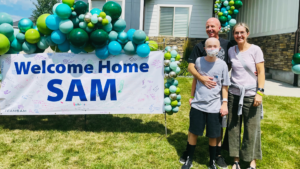
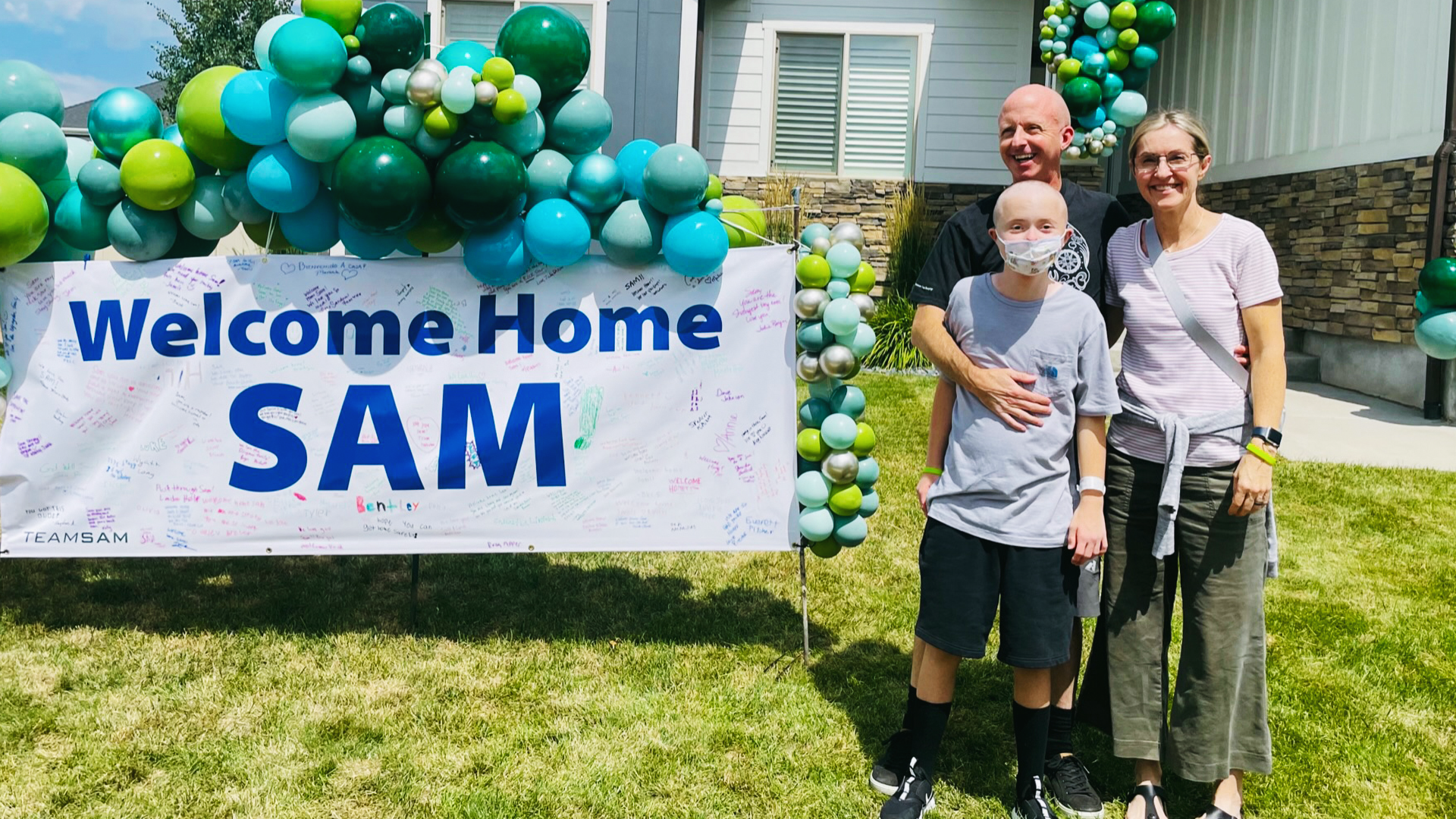
Meanwhile, in Mountain Green, Utah, 16-year-old Sam was diagnosed with the most common type of cancer in children, yet doctors had never seen a case like his before.
Sam’s parents, Tausha and Doug, noticed a lump on his neck one day that concerned them. A short while later, they learned he has pediatric acute lymphoblastic leukemia (pALL), a cancer of the blood and bone marrow, according to the National Cancer Institute. It’s also known as T-cell lymphoblastic lymphoma (T-LBL).
But Sam’s case surprised his doctors as well, as he’s the first person with Down syndrome to have this type of disease.
That made Sam’s treatment twice as hard for both him and his family. But Tausha and Doug were more overwhelmed by the outpouring of support as their community rallied around their son.
This episode also features in-depth commentary from renowned experts Lindsay Kilburn, MD, Pediatric Neuro-Oncologist, Children’s National Hospital, and Luke Maese, DO, Pediatric Oncologist, Primary Children’s Hospital, University of Utah Health.
803: More Than Skin Deep
For 54-year-old Shanthi, who has vitiligo, it’s not the condition itself that causes pain. It’s her inability to hide it.
At first, Shanthi, an African-American woman living in Detroit, Michigan, was able to easily hide her vitiligo because it was only on her lips. But it wasn’t long before it started to spread and trigger discoloration in other parts of her body.
While there’s a widely held misconception that vitiligo only develops in African-Americans, according to the National Institutes of Health, it affects all skin colors equally.
As the vitiligo spread, more people started to stare at Shanthi, placing a heavy emotional burden on her. But as she tells Medical Stories, she found the support she needed when she opened up to her family, especially her niece, Diamond.
Later, Medical Stories visits Methi, another individual who developed a skin condition and spent nine years trying to find relief.
Methi has chronic spontaneous urticaria (CSU), a condition in which red, itchy welts develop randomly all over her body, according to the Cleveland Clinic. The hives caused so much pain that she remembers “wishing I could scratch with a cheese grater.”
For almost a decade, Methi lived in despair, searching in vain for a treatment that would help her. But not only did she find relief, she also found a way to use her experience to give back to others.
This episode also features in-depth commentary from renowned experts Richard H. Huggins, MD, Dermatologist, Henry Ford Health, and Jonathan Bernstein, MD, Professor of Clinical Medicine, University of Cincinnati College of Medicine.
804: Fighting Through Fatigue
For years, Toby dealt with a strange condition that caused her itching and discoloration in her skin. But despite all her attempts to figure out what it was, it took her a long time to get a diagnosis. Toby, a Philadelphia resident, has mycosis fungoides cutaneous T-cell lymphoma (MF-CTCL), which the Cleveland Clinic identifies as a rare non-Hodgkin’s skin lymphoma. Because of her darker skin, a diagnosis eluded Toby and her doctors, who misdiagnosed her illness. But while the symptoms affected her quality of life, the changes in her skin also diminished her confidence in her appearance. But when Toby finally found a doctor who knew what was wrong, not only did she begin an effective treatment plan, she learned how to be proud of herself in her own skin.
Meanwhile, for Dora, who’s dealt with four episodes of breast cancer, one of the most challenging aspects has been the chemotherapy. Dora, who’s 63 years old and lives in Monck’s Corner, South Carolina, has developed chemotherapy-infused nausea and vomiting (CINV) since she started treatment. The National Cancer Institute says up to 80% of people undergoing chemo experience these side effects.
For Dora, that means losing her hair and constantly feeling sick and fatigued. Through it all, she’s relied not only on her doctors, but on her family, especially her husband, Cleveland, to help give her strength through the ordeal.
This episode also features in-depth commentary from renowned experts Larisa Geskin, MD, Professor and Director, Cutaneous Oncology, Columbia University; Ellen Kim, MD, Professor of Dermatology, and Director, Penn Cutaneous Lymphoma Program, University of Pennsylvania; and Yanis Bellil, MD, Medical Oncologist, Lowcountry Oncology Associates.
805: Out of Rhythm
As a cardiologist in Vero Beach, Florida, Howard was used to treating heart problems. But despite his expertise, he was caught off-guard when he developed his own heart condition.
Howard has atrial fibrillation (AFib), an irregular and rapid rhythm in the upper chambers of the heart. It can lead to complications like stroke or heart failure, according to the Mayo Clinic.
Medical Stories documents how because of his background, Howard’s journey with AFib was unique – as well as the cutting-edge procedure that helped treat his condition.
Later, in Bethesda, Maryland, we visit Nina, who battled constant health problems growing up, including deformities in her hand and trouble with her spine. But it wasn’t until she was a teenager that she experienced a life-threatening emergency.
Nina suffered an aortic dissection, in which her aorta tore open, causing blood to split apart the artery. Thankfully, doctors were able to save her life, but that was just the beginning of her ordeal, as she needed a transplant to prevent her from being hospitalized again.
Nina details how challenging her experience was, while also highlighting how her mom helped her push through the recovery process, even inspiring her to pursue a new dream.
This episode also features in-depth commentary from renowned experts Vivek Reddy, MD, Director of Electrophysiology, Mount Sinai Fuster Heart Hospital, and James Black, MD, Chief of Vascular Surgery at Johns Hopkins Hospital and Professor of Surgery at Johns Hopkins University.
806: Quiet Warnings
For Rick, his diagnosis of prostate cancer didn’t hit him until he realized he would have to tell his kids.
Rick had been enjoying his retirement in Sarasota, Florida, when he started having severe leg pain. After initial testing forced him to investigate further, he learned he had prostate cancer, the second-most common cancer in men in the U.S., according to the American Cancer Society.
But during his treatment, Rick not only kept a positive attitude – he found a way to give back that became his new purpose in life.
Later, we meet David, who was born in South Korea but raised by his adoptive parents in Ann Arbor, Michigan, where he enjoyed a happy childhood. But when he turned 13, he received some devastating news: He had a serious medical condition called hepatitis B.
According to the World Health Organization, it’s a viral affection that can attack the liver. Although he didn’t have any symptoms, David struggled with his condition at first, becoming withdrawn at school and refusing to commit to proper treatment.
But as he shares with Medical Stories, David’s family inspired him to not lose hope and even become an advocate for those dealing with the same disease.
This episode also features in-depth commentary from renowned experts Kosj Yamoah, MD, PhD, Chair, Department of Radiation Oncology, Moffitt Cancer Center, and Nancy Reau, MD, Section Chief of Hepatology, Rush University Medical Center, Chicago.
807-812 Titles and Descriptions to Come
Other Shows You May Like